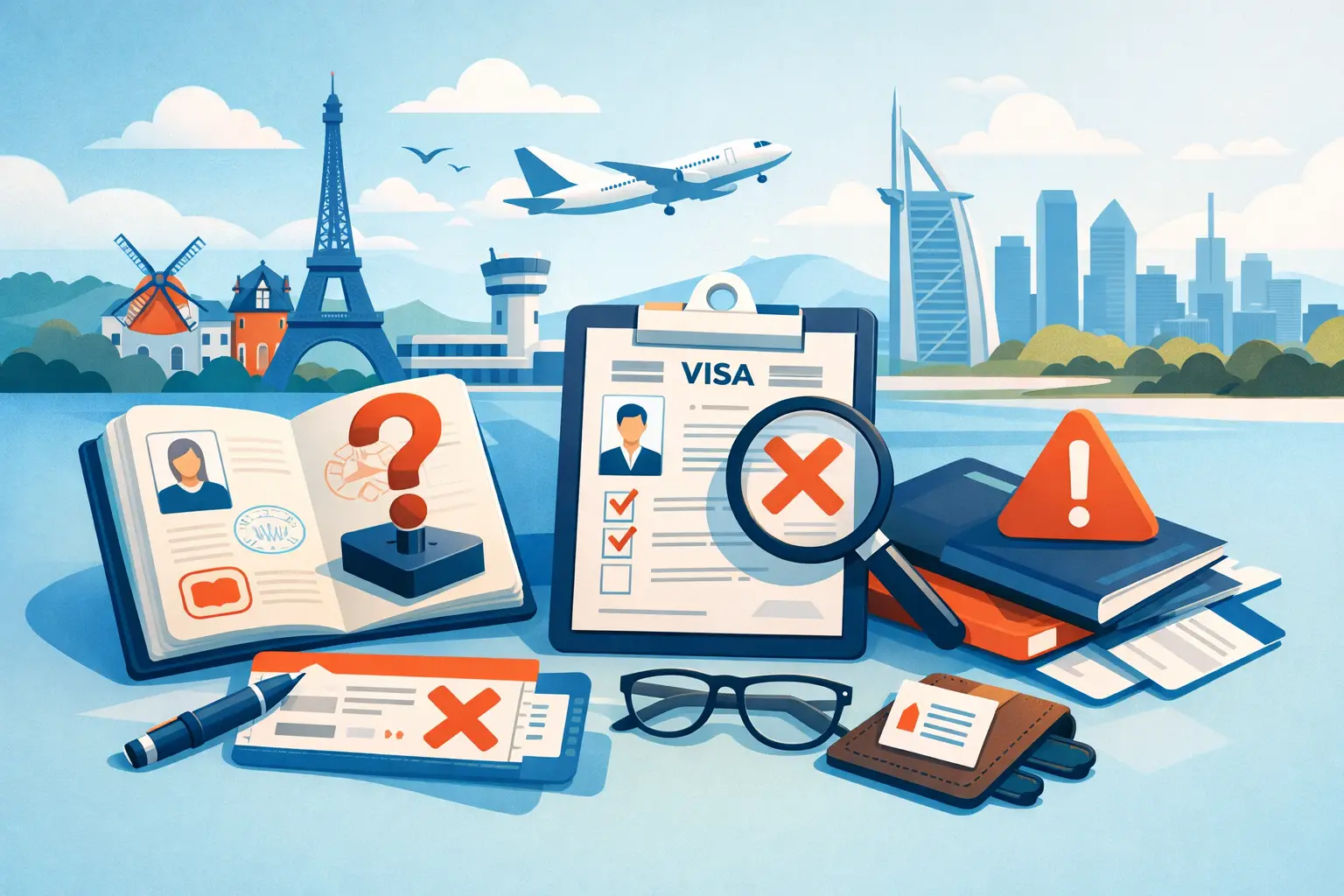
A visa refusal often starts long before a consular officer reviews your file. It begins with a rushed form, an inconsistent travel story, or a missing document that seemed minor at the time. If you want the best visa application mistakes to avoid, the real answer is simple: treat your application like a formal case, not a casual submission.
For many Nigerian and Ghanaian travelers living in the US or planning from abroad, the stakes are high. A delayed or refused visa can disrupt family events, business travel, holidays, and carefully coordinated flight plans. That is why details matter. Strong applicants are not always the ones with the highest income or longest travel history. They are often the ones who present clear, credible, and well-organized applications.
Why small visa errors cause big problems
Visa officers assess more than documents. They assess credibility, consistency, and intent. Even where the checklist looks straightforward, your application is still being read as a complete story. Does your purpose of travel make sense? Do your finances support the trip? Do your supporting documents match the form? Do your ties to home or country of residence appear stable and believable?
A single mistake does not always lead to refusal. But several small weaknesses can create doubt. That is usually where trouble starts. An unsigned letter, unclear funding source, or mismatch in travel dates may not seem serious on its own. Together, they can make your application look careless or incomplete.
Best visa application mistakes to avoid before you submit
1. Giving inconsistent information
This is one of the most common and most damaging errors. Your application form, bank statements, employment letter, invitation letter, hotel booking, and cover letter should all point in the same direction. If your form says you are traveling for tourism, but your supporting letter focuses on visiting family, that inconsistency raises questions.
The same applies to dates, job titles, salary figures, passport details, and relationship descriptions. Many applicants make these mistakes because they reuse old documents or rely on assumptions instead of reviewing every page carefully. Accuracy matters more than speed.
2. Submitting incomplete or weak documentation
A checklist is a starting point, not the full strategy. Some applicants provide the minimum and assume that is enough. Sometimes it is. Often, it is not.
If your finances are complex, your travel purpose needs context, or your circumstances involve sponsorship, you may need stronger documentation to make the case clear. For example, a simple bank statement without an explanation of large recent deposits can create more questions than reassurance. A letter of employment without leave approval may also feel incomplete for a temporary visit visa.
Strong applications do not overwhelm with irrelevant paperwork. They provide the right documents, in the right format, with a clear connection to the purpose of travel.
3. Using bank statements that create doubt
Financial evidence is where many applications become vulnerable. Visa officers are not only checking whether you have money. They are looking at whether the funds appear genuine, stable, and sufficient for your stated trip.
Statements with sudden large deposits, frequent unexplained transfers, or low closing balances can be problematic. So can accounts that do not reflect your claimed income. If someone else is sponsoring the trip, that sponsorship must be properly documented. Simply attaching another person’s statement without proof of relationship or a signed sponsorship letter is rarely persuasive.
This does not mean every applicant needs a perfect financial profile. It means the source of funds should make sense and align with the rest of the file.
4. Writing a vague or unconvincing travel purpose
Your reason for travel should be specific and credible. Saying you want to visit for holiday, business, or family reasons is not enough on its own. Your application should show what that means in practical terms.
Where are you going, for how long, and why at that time? Who is paying? If you are attending an event, where is the invitation or registration? If you are visiting family, what proof supports that relationship and their immigration status? If it is tourism, do your plans match your income and travel history?
A vague purpose can make a real trip look uncertain. A clear purpose gives the officer less room to doubt your intentions.
The mistakes applicants make after the form is complete
5. Ignoring travel history context
Some travelers worry too much about limited travel history. Others assume previous visas guarantee future approvals. Neither approach is quite right.
A strong travel history can help, especially if it shows compliance with immigration rules. But it does not cancel out a weak current application. On the other hand, a first-time international traveler can still be approved with a well-prepared file.
What matters is context. If you have traveled before, your passport stamps should support the story you present. If you have not traveled much, the rest of your profile needs to be particularly clear and stable. Applicants run into trouble when they lean on old approvals but neglect the quality of the current application.
6. Overlooking ties to home or country of residence
For temporary visas, one central question is whether you are likely to return after your visit. This is especially relevant for visitor visas to the UK, Schengen countries, Canada, the US, and UAE.
Ties can include steady employment, business ownership, family responsibilities, property, education, or lawful residence in your current country. But they must be presented credibly. A generic employment letter with no detail, or a business claim with no supporting evidence, may not carry much weight.
This area requires balance. Some applicants submit too little. Others submit large volumes of documents with no structure. The strongest approach is targeted evidence that clearly supports your ongoing commitments outside the destination country.
7. Applying too late or too early without a plan
Timing matters more than many people realize. Apply too late, and you may face avoidable stress, rushed document collection, or missed travel dates. Apply too early, and some documents may become outdated before a decision is made.
Different destinations have different processing patterns, and seasonal demand can affect timelines. Holiday periods, summer travel, and major event seasons often lead to longer waits. If you are traveling for a wedding, conference, family ceremony, or school-related purpose, your application should be prepared with enough time for biometrics, additional document requests, and possible delays.
Good timing is not just about convenience. It supports a more polished application.
Best visa application mistakes to avoid with professional support
8. Copying generic templates from the internet
Cover letters, invitation letters, and sponsorship letters should reflect your actual circumstances. Generic wording is easy to spot. Worse, applicants sometimes copy templates that include statements irrelevant to their case.
A strong letter is not dramatic or excessively long. It is precise. It explains the purpose of travel, funding, timeline, and supporting facts in a way that matches the rest of the file. If the letter says one thing and the documents say another, the letter becomes a liability instead of a strength.
9. Hiding previous refusals or immigration issues
This is a serious mistake. Many applicants fear that disclosing a previous refusal will harm their chances, so they leave it out. In most cases, non-disclosure is more damaging than the refusal itself.
Previous refusals, overstays, or immigration complications should be addressed honestly and carefully. Depending on the situation, they may need explanation and supporting evidence. A past refusal does not automatically mean a new refusal. But dishonesty can undermine the entire application.
10. Treating visa preparation as a simple admin task
This may be the most expensive mistake of all. A visa application is not just paperwork. It is presentation, strategy, and risk management.
Some cases are straightforward. Others involve sponsorship, mixed income sources, self-employment, dependent family members, complex travel history, or applications from a country different from your nationality. In those situations, knowing what to include, what to explain, and how to organize the file can make a meaningful difference.
This is where experienced guidance becomes valuable. A premium service is not about filling forms for you. It is about identifying weak points before submission, aligning documents properly, and helping you present a file that is credible from the first page to the last.
What a strong visa application usually looks like
A strong application feels coherent. The forms are accurate. The financial documents make sense. The purpose of travel is specific. The supporting letters are tailored. The timeline is realistic. Nothing appears rushed, contradictory, or unexplained.
That does not mean every applicant needs an extensive travel history, a very high salary, or a perfect profile. It means your application should be honest, complete, and well-supported. Visa decisions are not always predictable, and no ethical consultant should promise approval. But careful preparation can reduce avoidable risk significantly.
If you want expert support with Schengen, UK, Canada, USA, or UAE visa processing, Walz Travels offers professional guidance designed for serious travelers who value clarity, discretion, and reliability. To discuss your application, WhatsApp wa.me/12317902336 or visit walztravels.us. A well-prepared file does not guarantee the outcome, but it gives your travel plans the professional foundation they deserve.