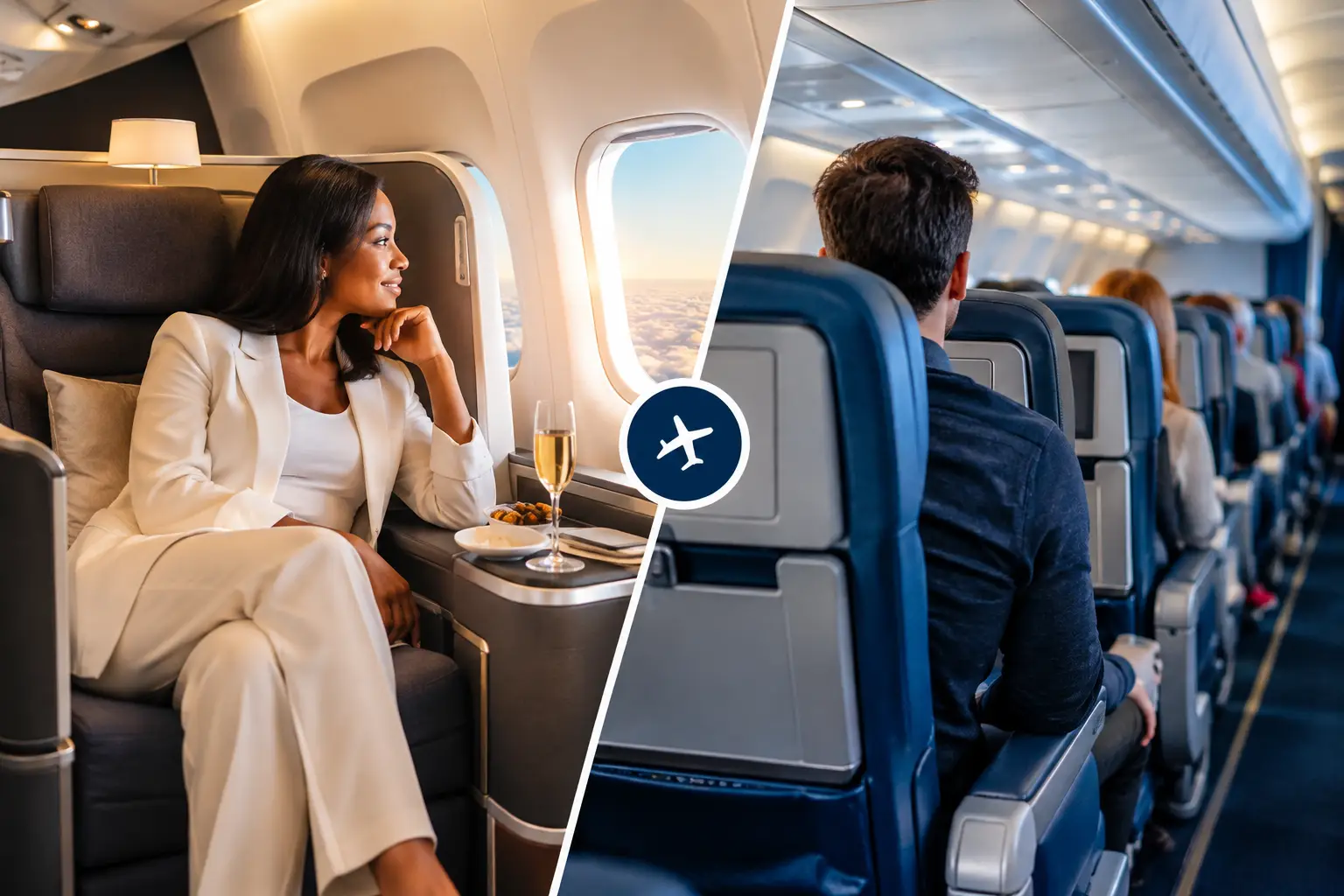
A 10-hour overnight flight can feel like the first day of a holiday or a test of endurance. That is the real question behind business class versus economy flights: not simply which cabin is better, but whether the additional cost changes the quality of your trip enough to justify it.
For professionals and families traveling between Africa, the UK, Canada, the UAE, Europe, and North America, the answer often depends on timing, purpose, health, and the value of arriving well-rested. Business class is a meaningful upgrade, but economy remains the sensible choice in many situations. The best decision is one that supports your schedule and budget without compromising what matters most.
Business Class Versus Economy Flights: The Core Difference
Economy class is built for practical, affordable air travel. Your ticket gets you safely to your destination, usually with standard checked baggage, a meal on long-haul routes, and access to the same destination network as premium passengers. Seat pitch, meal quality, baggage rules, and entertainment vary by airline and fare type, but the experience is designed around efficiency rather than personal space.
Business class is designed around comfort, time, and service. On many international routes, the seat reclines fully into a bed. You may receive priority check-in, lounge access, priority boarding, enhanced dining, larger baggage allowances, and faster baggage delivery. The difference becomes especially noticeable before takeoff and after landing, when airport queues and long connections can add pressure to an already demanding journey.
The gap is not identical on every flight. A short regional business-class seat may offer extra space and a better meal, but it may not have a lie-flat bed. On a long-haul aircraft, however, business class can offer a private suite-like setting and a genuine opportunity to sleep. Always assess the specific airline, aircraft, route, and departure time rather than relying on the cabin name alone.
Comfort Has a Different Value on Long-Haul Travel
For flights under four hours, economy is often entirely reasonable. A window seat, thoughtful packing, and an itinerary that leaves room to recover can make the trip straightforward. Paying several times more for business class may not produce a proportionate benefit on a short daytime flight.
The calculation changes on routes lasting eight hours or more, particularly overnight flights. In economy, limited reclining space can make sleep difficult. You may arrive in London, Toronto, Dubai, Accra, Lagos, or another major hub tired before a business meeting, family event, or onward journey even begins.
A lie-flat business-class seat can allow you to rest properly, arrive refreshed, and use your first day productively. For a traveler flying directly to a presentation, conference, wedding, or time-sensitive appointment, that result can have a practical financial and personal value. The premium is not only for a wider seat. It is for better use of the day that follows.
Health and mobility also deserve consideration. Travelers who are pregnant, recovering from illness, managing back pain, or traveling with physical limitations may find the additional room and easier airport experience particularly valuable. This does not replace medical advice or airline fitness-to-fly requirements, but comfort can be a legitimate travel priority rather than an indulgence.
What You Actually Pay For in Business Class
The headline difference between business class and economy is the fare, sometimes by a substantial margin. A business-class ticket may cost two, three, or more times the price of an economy ticket, depending on demand, route, airline, season, and how far in advance you book.
However, comparing only the base fare can be misleading. A business-class ticket may include two checked bags, flexible changes, seat selection, lounge access, priority services, and higher mileage earning. An economy fare may be lower at first glance but could carry charges for baggage, preferred seats, changes, or cancellations. The final comparison should be based on the complete ticket conditions.
Flexibility is often overlooked. When travel depends on visa issuance, corporate schedules, family circumstances, or connecting flights, a more flexible fare can protect you from costly last-minute changes. Yet business class is not automatically refundable or changeable without fees. Every ticket has its own rules, and lower promotional business fares can be restrictive.
For travelers paying personally, the most effective approach may be selective upgrading. Consider business class for the overnight outbound flight, then economy or premium economy for the daytime return. Another option is to reserve economy and monitor paid upgrade offers closer to departure. These options are never guaranteed, but they can make premium travel more attainable when the journey truly calls for it.
The Middle Ground: Premium Economy
Premium economy deserves a place in the conversation because it can offer a strong balance between price and comfort. It generally provides a wider seat, extra legroom, greater recline, improved meals, and additional baggage compared with standard economy. It does not usually offer a lie-flat bed or business-class lounge access, but it can significantly improve a long flight.
For many couples, families, and professionals managing travel costs, premium economy is the practical middle ground. It is particularly useful when business class would stretch the budget too far, but standard economy feels difficult for a long overnight journey.
Availability varies considerably. Some airlines offer a distinct premium-economy cabin on long-haul routes, while others provide extra-legroom economy seats instead. These are not the same product. Extra-legroom seating gives you more room but normally retains the same service, meal, and baggage conditions as economy. Read the fare details carefully before booking.
When Economy Is the Smart Choice
Choosing economy does not mean settling for a poor travel experience. It can be the more sensible option when the flight is short, you are traveling with several family members, or the fare difference could be put toward accommodation, a tour, visa costs, or experiences at your destination.
Economy also makes sense when your schedule allows a recovery day after arrival. If you are visiting relatives, taking a relaxed vacation, or flying during daylight hours, the advantage of a lie-flat seat may be less significant. A well-selected economy seat can improve the experience considerably. Exit-row seats, bulkhead seats, and preferred seats with extra legroom are often worth considering, though some have limitations such as fixed armrests or reduced under-seat storage.
The key is to avoid booking the lowest fare without checking what it includes. Confirm baggage allowance, seat selection, transit requirements, fare changes, and cancellation conditions. An inexpensive ticket that creates stress later is not always good value.
When Business Class Is Worth the Investment
Business class is most compelling when time matters as much as money. It can be a wise investment for a short work trip where you need to perform immediately, a milestone trip where comfort is part of the experience, or an itinerary involving multiple long-haul sectors.
It is also worth considering for travelers with tight connections. Lounge access can provide a quieter place to work, shower, eat, or rest between flights. Priority ground services may reduce airport friction, although no cabin can eliminate delays, security procedures, immigration checks, or weather disruptions.
For corporate travelers, business-class travel policies are often based on flight duration and business need rather than seniority alone. A company may reasonably approve the cabin for an overnight intercontinental trip while using economy for shorter journeys. This approach recognizes that employee well-being and readiness can affect the outcome of the trip.
How to Choose the Right Cabin for Your Trip
Start with the purpose of the journey. If you need to be alert soon after landing, place a higher value on rest. If your plans are flexible and the fare difference is substantial, economy or premium economy may deliver better overall value.
Then consider the full itinerary, not only the longest flight. A comfortable long-haul segment can lose its appeal if it is followed by an exhausting self-transfer or an unrealistic connection. Check transit visa rules where relevant, confirm whether baggage is checked through, and allow adequate time between flights.
Finally, compare the actual product. Look at the aircraft seat map, operating carrier, flight timing, baggage allowance, and fare rules. A trusted travel professional can help compare these details across airlines and ensure that your flight choice fits alongside your visa timeline and accommodation plans.
The right cabin is the one that lets you arrive prepared for what matters. Whether you choose a carefully planned economy itinerary or a fully rested business-class experience, speak with Walz Travels on WhatsApp for professional flight support tailored to your journey.