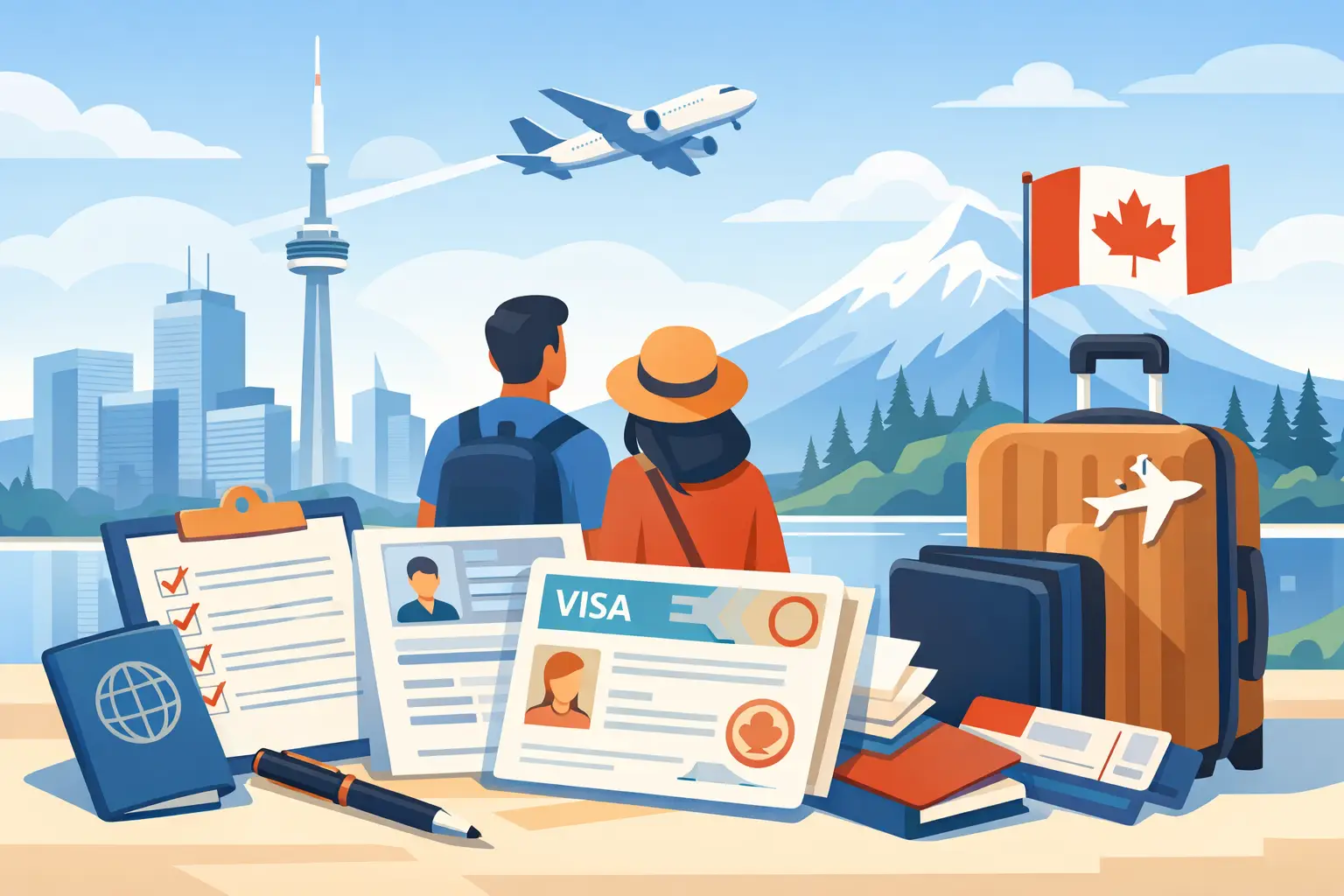
A Canada visitor visa application is not won by submitting the most documents. It is won by submitting the right documents in a clear story: why you are visiting, how you will pay for the trip, and why you will return to where you live after your visit. For Nigerian and Ghanaian passport holders, as well as other travelers who require a Temporary Resident Visa, a carefully prepared canada visitor visa checklist can make the difference between a credible application and one that leaves unanswered questions.
Canada assesses each file on its own merits. There is no guaranteed approval, even for applicants with strong income or previous travel history. The goal is to present accurate, consistent evidence that gives the visa officer confidence in your plans.
Start With the Correct Type of Canada Visit
A Canada visitor visa, formally called a Temporary Resident Visa or TRV, is generally for tourism, visiting family or friends, short business visits, or short courses that do not require a study permit. It is not permission to work in Canada, and it should not be used to suggest an intention to remain in Canada permanently.
Before gathering documents, be precise about your purpose. A family visit should be supported by information about your host and your relationship. A holiday should have a practical itinerary and accommodation plan. A business trip should identify the company, meetings, event, or commercial purpose involved. Your documents should support one central purpose rather than several vague possibilities.
Applicants living in the United States, United Kingdom, UAE, Canada, or elsewhere should also check requirements based on their passport and current immigration status. A valid US visa, residence permit, or travel history can be helpful context, but it does not replace the need to qualify for a Canadian visitor visa.
Canada Visitor Visa Checklist: Core Documents
The exact documents can vary by country of application and individual circumstances, but the following items form the foundation of a well-prepared file:
- A valid passport, including clear copies of the biodata page and relevant stamps, visas, or previous travel pages.
- The required visitor visa application forms and family information, completed honestly and consistently.
- Recent passport photographs that meet the requested specifications.
- Proof of your legal status where you live if you are applying outside your country of citizenship, such as a residence permit, visa, work authorization, or study authorization.
- A travel plan showing intended dates, places to visit, and where you expect to stay.
- Financial evidence demonstrating that you can pay for transportation, accommodation, daily expenses, and your return journey.
- Documents that show meaningful ties to your country of residence or home country.
- A letter of explanation that brings the application together where clarification is useful.
Do not treat this as a document-shopping exercise. Every item should answer a real question an officer may have. For example, a bank statement is more persuasive when it shows regular income and normal financial activity, rather than a large unexplained deposit shortly before the application.
Build a Travel Plan That Feels Realistic
A visitor visa itinerary does not need to be expensive or overly detailed. It does need to make sense. State your anticipated arrival and departure dates, the cities you plan to visit, and your accommodation arrangement. If you are staying with a relative or friend, include their address and a simple outline of the visit.
Avoid booking nonrefundable flights purely to prove intention to travel. Visa decisions can take time, and no application outcome is certain. A sensible itinerary, supported by a reservation where appropriate, is usually safer than making costly commitments too early.
For a family visit, an invitation letter should explain who is inviting you, their status in Canada, their contact details, your relationship, why you are visiting, and how long you intend to stay. The host can also provide proof of their Canadian status and financial documents if they are covering any costs. However, an invitation letter does not remove the applicant's responsibility to show personal circumstances and reasons to return home.
Show Finances Clearly, Not Dramatically
There is no single published amount that guarantees a Canada visitor visa. The funds you need depend on the duration of your trip, where you will stay, who will pay, and your overall travel plan. A two-week visit with accommodation provided by family is different from a month-long hotel stay across several cities.
Provide recent bank statements that reflect your normal financial position. Where possible, include evidence of salary, employment, business income, investments, or other legitimate sources of funds. If a spouse, parent, employer, or host is paying for the trip, explain the arrangement and include their financial evidence along with proof of the relationship or connection.
Large, recent deposits deserve explanation. If money came from a bonus, property sale, business payment, loan, or family support, include documents that show its source. A truthful explanation is far better than leaving an officer to make assumptions.
Prove You Have Reasons to Return
This is often the most important part of a visitor visa application. Canadian visa officers assess whether an applicant is likely to leave Canada at the end of the authorized visit. Strong return ties look different for every person.
Employment can be demonstrated through a letter confirming your job title, salary, start date, approved leave, and expected return to work. Business owners can provide registration documents, tax records, company bank statements, contracts, invoices, or evidence of ongoing operations. Students may submit enrollment evidence and a school letter. Property ownership, a lease, close family responsibilities, and established community commitments may also help when relevant.
Quality matters more than quantity. A professional with a stable job, regular salary, and approved leave should make that narrative easy to understand. An entrepreneur should show that the business is active and requires their return. If you are between jobs, recently changed status, or have limited travel history, your application may need a more carefully explained case. These circumstances do not automatically mean refusal, but they require thoughtful evidence.
Write a Focused Letter of Explanation
A letter of explanation is your opportunity to organize the facts without overstating them. Keep it direct and professional. Explain your purpose of travel, proposed dates, who is paying, your current work or family situation, and the reasons you will return after the trip.
Use the letter to address potential questions, such as a recent large deposit, a name difference across documents, previous visa refusals, a long gap in employment, or a sponsor paying for your visit. Never hide previous refusals or immigration history. Inconsistencies can harm credibility far more than a difficult fact that is openly and properly explained.
A useful letter is usually concise. It points the officer to supporting documents instead of repeating every detail contained in the application.
Common Mistakes That Weaken Good Applications
Many refusals stem from a file that is incomplete, inconsistent, or insufficiently explained. One common mistake is submitting a generic invitation letter without showing the applicant's own financial and personal situation. Another is presenting an itinerary that does not match the stated purpose of travel.
Applicants should also be cautious about documents that appear manufactured, altered, or rushed. Misrepresentation can have serious immigration consequences, including a possible ban. Only submit genuine records and ensure dates, names, salary figures, travel dates, and family details align across the entire application.
Translations also matter. If a required document is not in English or French, provide an appropriate translation in line with the application instructions. Clear scans, sensible file names, and a logical order make a stronger professional impression than a pile of duplicate paperwork.
A Final Review Before You Submit
Read the application as if you know nothing about the traveler. Can you understand, within a few minutes, who they are, why they are traveling, how the trip will be funded, and what brings them back after the visit? If any answer depends on guesswork, add a concise explanation or stronger supporting record.
Visa applications deserve the same attention you would give an important professional commitment. When your travel plans, financial evidence, and personal ties tell one honest story, you give your application its best possible foundation. For expert support with your Canada visa preparation and wider travel arrangements, contact Walz Travels on WhatsApp or visit the Walz Travels website.