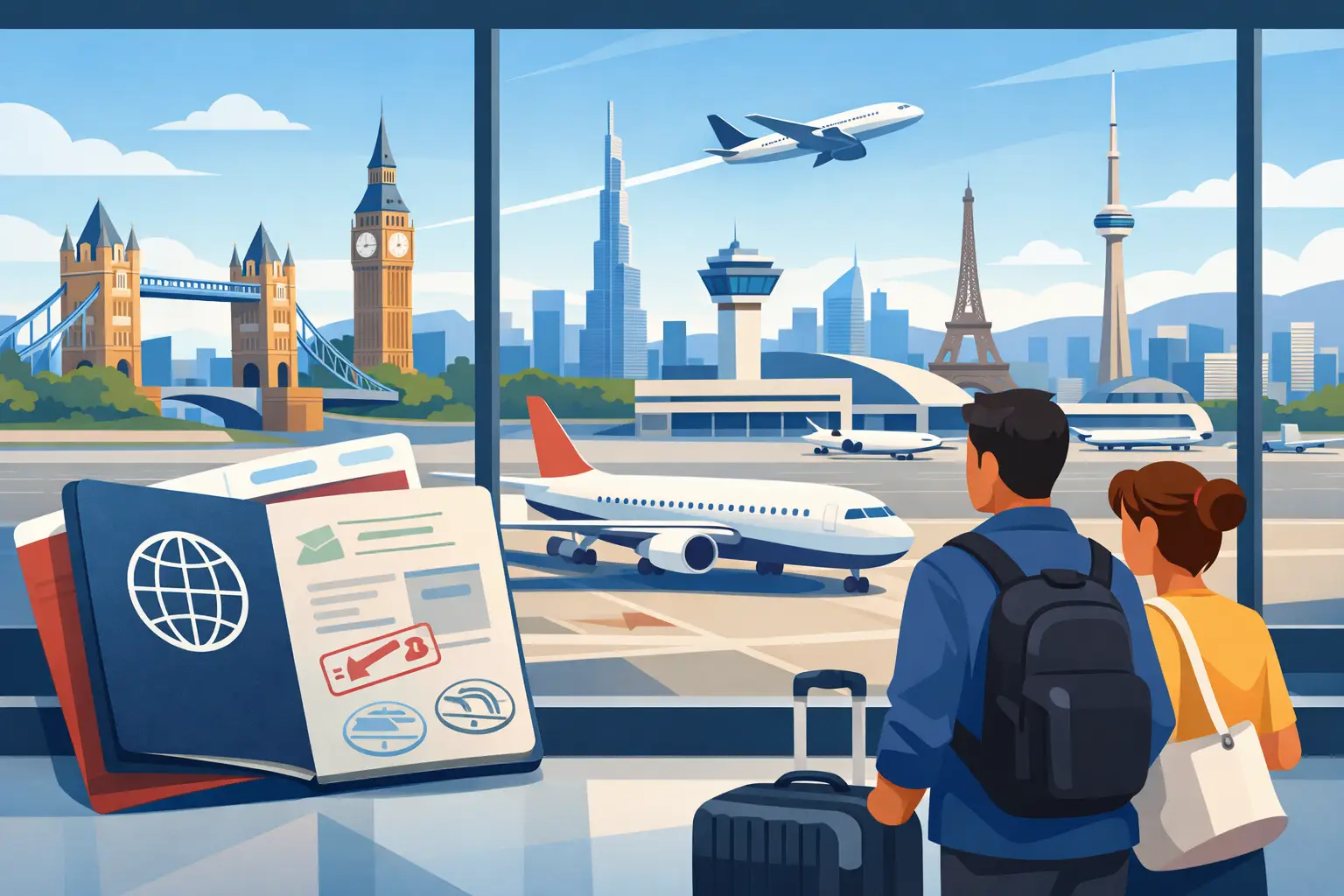
A client meeting in London, a trade event in Dubai, or a partner visit in Paris can create real commercial value. Yet for many professionals, the opportunity is only as secure as the visa application behind it. Visa support for business travelers is not simply about completing forms. It is about protecting a schedule, presenting a credible travel purpose, and reducing the risk that a documentation gap disrupts an important trip.
For Nigerian and Ghanaian passport holders, particularly those living and working across the UK, Canada, the UAE, Nigeria, and Ghana, business travel can involve several jurisdictions, short lead times, and strict application standards. A well-prepared application gives decision-makers a clear, consistent picture of why you are traveling, who is funding the visit, and why you will return as planned.
Why Business Visa Applications Need a Different Standard
Business travel is often time-sensitive, but urgency does not lower a consulate's requirements. If anything, a tight itinerary makes accuracy more valuable. Embassy teams still need to assess the purpose of travel, your financial position, your professional ties, and the credibility of the host organization.
A business visa application should tell one coherent story. Your invitation letter, employer letter, travel dates, hotel reservation, bank statements, and supporting records should all support the same purpose. When dates conflict or the stated reason for travel is vague, an otherwise qualified applicant may face delays, further questions, or refusal.
The strongest applications are neither overfilled with unrelated documents nor built on assumptions. They are organized around the destination's stated requirements and the applicant's individual circumstances. A self-employed consultant, a company director, and an employee attending a conference may all be taking legitimate business trips, but the evidence each person needs can be different.
What Quality Visa Support for Business Travelers Includes
Professional support begins before an appointment is booked. The right adviser reviews the proposed trip with the traveler, identifies the appropriate visa category, and considers whether the available timeline is realistic. This early review can prevent a costly mistake, such as applying under a visitor category when a business category is required, or booking nonrefundable travel before visa timing has been considered.
A clear document strategy
Business applications often require more than a passport and bank statement. Depending on the country and the nature of the trip, supporting evidence may include a formal invitation from the host company, conference registration, proof of employment, business registration documents, recent tax records, corporate bank statements, payroll evidence, or proof of a long-standing commercial relationship.
The purpose is not to submit every document available. It is to submit relevant evidence in a logical order. A strong document strategy explains the connection between the traveler, the sponsoring organization, and the planned activities. It also addresses who will pay for flights, accommodation, local transport, and other trip costs.
Careful application preparation
Visa forms are legal declarations. Small errors in employment details, travel history, marital status, prior refusals, or dates can create unnecessary concerns. Good support includes reviewing entries against the documentary evidence before submission.
This matters especially for frequent travelers. Previous visas, entry stamps, and travel dates should be represented accurately. A traveler should never hide a refusal or provide an answer simply because it appears more favorable. Transparent applications are safer than applications that attempt to anticipate what an officer wants to hear.
Travel planning that supports the application
Flights, accommodation, travel insurance, and an itinerary are not always formal visa requirements in the same way. However, they can help demonstrate that the visit has been planned responsibly. The details must remain reasonable and consistent with the stated business purpose.
For example, a three-day conference should not be paired with an unexplained two-week itinerary in several countries. If additional personal travel is planned, it should be disclosed appropriately and supported by the overall schedule. Business and leisure can coexist in one trip, but the application should make that arrangement easy to understand.
Appointment and submission guidance
Different destinations have different appointment systems, biometric rules, processing windows, and submission centers. Applicants may also need to provide originals, certified copies, translated documents, or specific photo formats. Missing a local requirement can lead to an incomplete submission even when the core case is sound.
Professional guidance helps travelers know what to bring, what to expect at biometrics, and when to avoid making final commitments. It does not promise an approval. No legitimate agency can make that promise, because final visa decisions remain with the relevant immigration authority.
The Evidence That Carries the Most Weight
The documents that matter most depend on the destination and your profile, but credibility is the common thread. An employed professional can usually show a current employment letter, approved leave, recent pay records, and a clear reason the employer supports the trip. A business owner may need to demonstrate that the company is active and that the business has the means and reason to fund the visit.
Financial evidence should make sense in context. A large recent deposit without an explanation can raise questions. Where funds have come from a legitimate sale, bonus, contract payment, or transfer, supporting evidence may help explain the transaction. Equally, a sponsor letter should be backed by evidence that the sponsor has the capacity and relationship to cover the stated costs.
Ties to your country of residence are also essential. These can include ongoing employment, a business, family responsibilities, lawful residency, property, or continuing education. The goal is not to prove that you will never travel. It is to show that you have a credible reason and ability to leave the destination after your temporary visit.
Avoid These Common Business Travel Mistakes
The first mistake is waiting until the invitation arrives before considering visa timing. Invitations may be issued close to an event, but appointment availability and processing times can be less predictable. Start the conversation as soon as travel is likely, even if every meeting detail is not final.
The second is using generic invitation letters. A useful invitation identifies the traveler, host organization, business purpose, visit dates, planned activities, and financial arrangements. It should be signed by an appropriate representative and match the rest of the application.
The third is treating travel bookings as a substitute for evidence. An expensive flight ticket does not prove eligibility. It can also create financial pressure if a visa decision takes longer than expected. Booking strategy should be sensible, particularly where the destination advises applicants not to finalize travel until a visa has been issued.
Finally, avoid submitting documents that are altered, unverifiable, or inconsistent. The consequences can extend beyond one refusal and affect future applications. A straightforward, well-supported case is always the better long-term approach.
When a Corporate Travel Partner Adds Value
For companies with staff traveling regularly, visa planning should be part of travel management rather than a last-minute administrative task. A corporate travel partner can help standardize document collection, monitor passport validity, coordinate flight and hotel options, and maintain clearer travel records for employees.
This is particularly valuable for organizations with African operations or distributed teams across several countries. One traveler may need support for a Schengen business visit, while another is attending meetings in the UAE or applying for a UK, Canadian, or U.S. visa. Requirements, processing times, and risk factors vary, so a single internal checklist rarely works for every journey.
The right support also recognizes the human side of business travel. Professionals may be managing deadlines, family obligations, and high-stakes meetings at the same time. Clear advice and timely document review allow them to focus on the work the trip is meant to accomplish.
A visa is not merely a travel document. For a business traveler, it is often the final gate between a prepared professional and an important opportunity. Begin early, keep every detail consistent, and seek guidance that respects both your time and the seriousness of the application. For tailored visa and corporate travel support, WhatsApp Walz Travels at 12317902336.