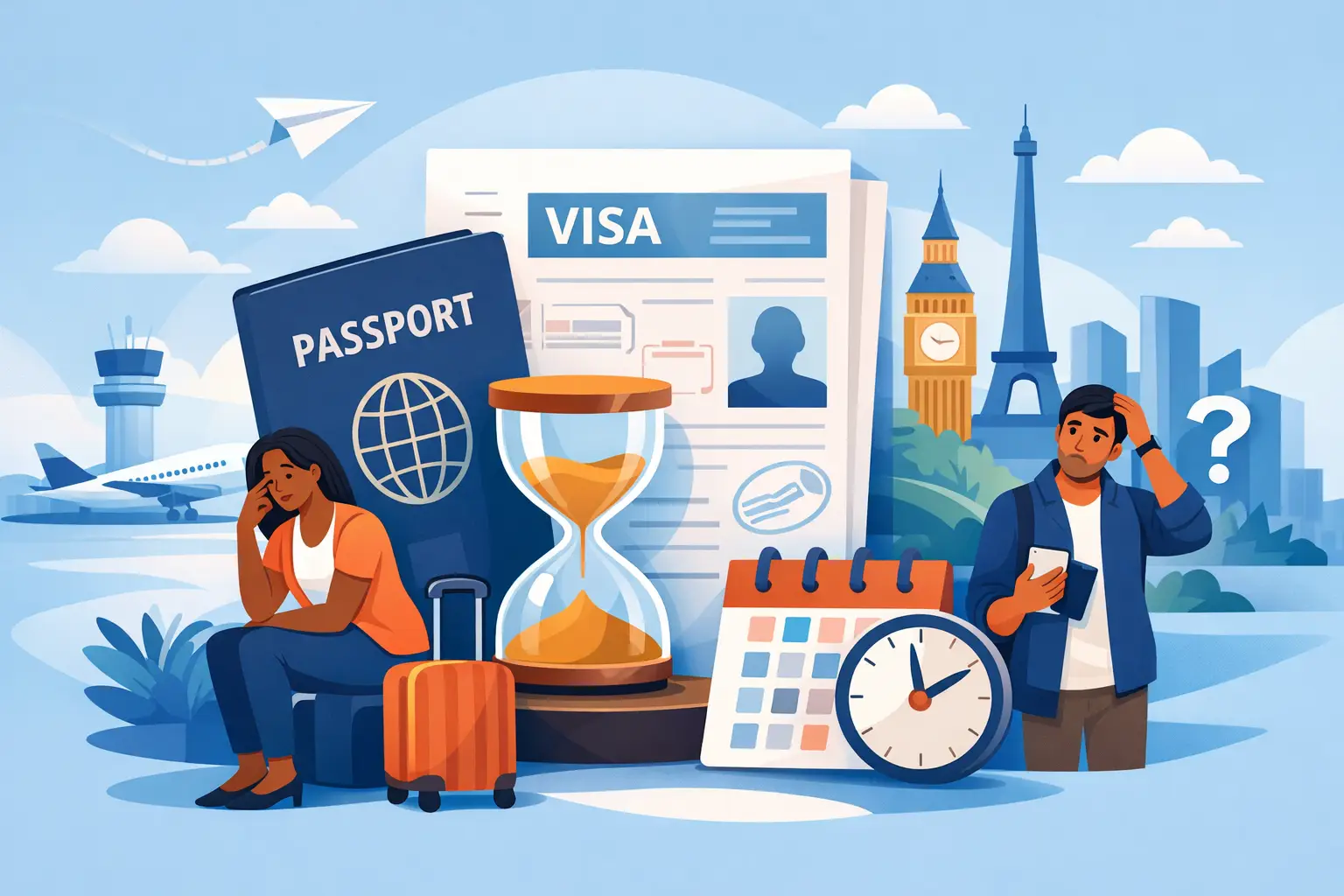
A flight date can feel very close when your visa status still reads “under process.” If you are asking, why is visa processing delayed, the most useful answer is rarely a single reason. Visa decisions move through several checks, and a delay may be caused by embassy workload, further verification, a document issue, or processes outside the consulate’s direct control.
For travelers planning a Schengen, UK, Canada, USA, or UAE trip, the uncertainty can affect more than an itinerary. It can mean changing leave dates, holding hotel reservations, explaining plans to family, or reconsidering a time-sensitive business trip. The right response is calm, informed action - not repeated messages that may not change the timeline.
Why Is Visa Processing Delayed?
A published processing time is an estimate, not a guarantee. It often reflects the average time for straightforward applications submitted with complete documentation. Individual files can take longer when an immigration authority needs to assess circumstances more closely.
The most common reason is application volume. Demand rises sharply before summer holidays, Christmas and New Year travel, school breaks, major sporting events, and popular business conference periods. A visa application center may have available appointments, but the embassy or immigration office making the decision can still be managing a large queue.
Your passport nationality, country of application, travel history, and destination can also affect the level of review required. Nigerian and Ghanaian passport holders, like applicants from every country, may be subject to additional verification depending on the destination’s immigration procedures and the details of the individual application. This is not automatically a negative sign. It may simply mean the officer needs more time to complete required checks.
Additional checks and administrative processing
Visa offices verify that an applicant’s purpose of travel, financial situation, employment or business commitments, accommodation, and intention to return are consistent with the documents submitted. If information needs to be confirmed with an employer, school, bank, host, sponsor, or another government department, the timeline can extend.
For some destinations, particularly the United States and Canada, an application may enter administrative processing or additional background review. The visa officer may not be able to provide a precise completion date while this is underway. It is frustrating, but it is usually not something an applicant can accelerate by submitting multiple status inquiries.
Missing, unclear, or inconsistent documents
A small inconsistency can create a larger delay. A bank statement that does not clearly show the account holder’s name, a leave letter that conflicts with travel dates, an incomplete travel itinerary, or a sponsor document that does not explain the relationship may prompt a request for clarification.
In other cases, the officer may not ask for more documents immediately. They may review the existing file in greater detail before making a decision. This is why document quality matters as much as document quantity. Providing a large bundle of unrelated paperwork can make a file harder to assess rather than stronger.
Appointment, decision, and passport return are separate stages
Travelers often view visa processing as one timeline, but it has several stages. First, you secure an appointment and submit biometrics and documents. Then the relevant embassy, consulate, or immigration authority assesses the application. After a decision, the passport may need to be printed, transferred to a visa application center, and returned by courier or collected in person.
A delay at any one stage can affect the overall schedule. For example, a decision may be complete while passport dispatch takes longer because of a public holiday, a courier backlog, or high volume at the collection center. A “processed” notification does not always confirm that a visa has been approved, nor does it always mean the passport is ready for collection that same day.
Public holidays, system issues, and changing procedures
Embassies follow local public holidays in their country of operation as well as holidays in the destination country. A long weekend can reduce working days more than applicants expect. Technical outages, changes to appointment systems, security updates, and revised immigration rules can also slow processing temporarily.
These are difficult factors to predict. However, they reinforce one practical principle: avoid building an international trip around the earliest possible visa estimate. A premium travel plan deserves enough time for the visa process to unfold without forcing expensive last-minute changes.
What You Should Do When Your Visa Is Taking Longer
Start by checking the official tracking channel provided by the embassy, consulate, immigration authority, or visa application center. Use the reference number exactly as issued, and review any email folders for document requests or collection instructions. If the authority has requested additional information, respond accurately and within the stated deadline.
Next, compare the current waiting period with the processing range that applied when you submitted your application. If your case is still within that window, it may be progressing normally even if it feels slow. If it has moved well beyond the stated timeline, a concise inquiry through the authorized channel may be appropriate. Include your full name, passport number, application reference, submission date, intended travel date, and a clear explanation of any genuinely urgent reason for travel.
Avoid booking nonrefundable flights, hotels, tours, or event tickets before your visa is issued unless you are comfortable with the financial risk. A confirmed flight reservation can support many visa applications, but a fully paid ticket does not cause an embassy to approve a visa faster. In fact, immigration authorities regularly advise travelers not to make irreversible arrangements before a decision is made.
If travel dates can move, speak with your airline, hotel, or tour provider early. Flexible fares and refundable reservations may cost more initially, but they can reduce pressure when a visa timeline changes. For family celebrations, conferences, or cruise departures, consider whether there is a later departure date or a backup plan worth holding.
When an Urgent Request May Help
Urgent processing is not available for every destination or application type, and requests are assessed at the authority’s discretion. A credible emergency, such as serious illness, bereavement, urgent medical care, or an essential business obligation, may justify a request for priority consideration. Supporting evidence is essential.
A short message saying that tickets are booked is usually not enough. If you must request urgent review, provide only relevant evidence, such as a hospital letter, death certificate, employer statement, conference invitation, or documentation explaining why the travel cannot reasonably be postponed. Be truthful and measured. Exaggerated claims can damage credibility.
How to Reduce Visa Delays on Your Next Trip
The strongest protection against delays is preparation before the application is submitted. Apply as early as the destination’s rules allow, especially for peak-season travel. Check passport validity well in advance, because many countries require several months of validity beyond your planned departure date.
Your travel purpose should be easy for an officer to understand. A professional attending a conference should provide a clear invitation, employer letter, and logical travel schedule. A family visitor should show the host’s status, relationship, address, and a realistic plan for the visit. A tourist should submit a consistent itinerary, accommodation details, and evidence of financial ability that matches the trip.
It also helps to keep copies of everything submitted and to ensure every date, name, and address aligns across the application form and supporting documents. If your circumstances are complex - for example, you are self-employed, sponsored by a relative, traveling with children, or applying from a country where you are not a citizen - expert review can prevent avoidable gaps.
A delayed visa is not necessarily a refused visa, and silence from an embassy does not automatically mean something is wrong. It means the decision is still within a process that must be completed carefully. Give yourself time, keep your documentation organized, and make travel arrangements with flexibility where possible. For tailored visa and international travel support, message Walz Travels on WhatsApp at +1 231 790 2336.