A visa refusal often begins long before the embassy reviews your file. It starts with one missing bank statement, an inconsistent travel history, or a document that makes sense to you but not to the officer reading your application. That is why the best visa documents checklist is not simply a packing list for paperwork. It is a way to present your case clearly, professionally, and with the level of detail serious international travel requires.
For many Nigerian and Ghanaian travelers, especially professionals and families living in the US, UK, Canada, or the UAE, the challenge is not whether they have documents. It is whether those documents tell a convincing story. A strong visa file shows identity, financial capacity, purpose of travel, and reason to return. When one of those areas is weak, the application can slow down or fail.
What the best visa documents checklist should actually do
A useful checklist should help you do three things at once. First, it should confirm that you have the standard documents most embassies expect. Second, it should help you match your paperwork to the specific visa type and country. Third, it should reduce contradictions across your forms, letters, and financial records.
This is where many applicants make avoidable mistakes. They download a generic checklist online and assume it applies equally to Schengen, UK, Canadian, US, and UAE applications. It does not. The categories are similar, but the level of scrutiny, supporting evidence, and formatting expectations can vary significantly.
For example, a tourist visa file for France may emphasize itinerary logic, hotel reservations, travel insurance, and proof of funds in a different way than a UK visitor visa application, where the overall credibility of your financial and personal circumstances may carry even more weight. The principle is the same, but the file must still be tailored.
Best visa documents checklist for most applications
At the core, most strong applications begin with a valid passport, completed visa form, compliant passport photographs, and the relevant visa fee receipt or appointment confirmation. Those are the basics, but they are rarely the deciding factor unless something is wrong.
The real strength of your application usually comes from the supporting documents. Proof of employment or business activity matters because it helps establish stability. Recent bank statements matter because they show whether your financial position supports the trip you are planning. A travel itinerary matters because it explains your purpose and timing. Supporting identity and civil documents matter because they give context to your personal ties.
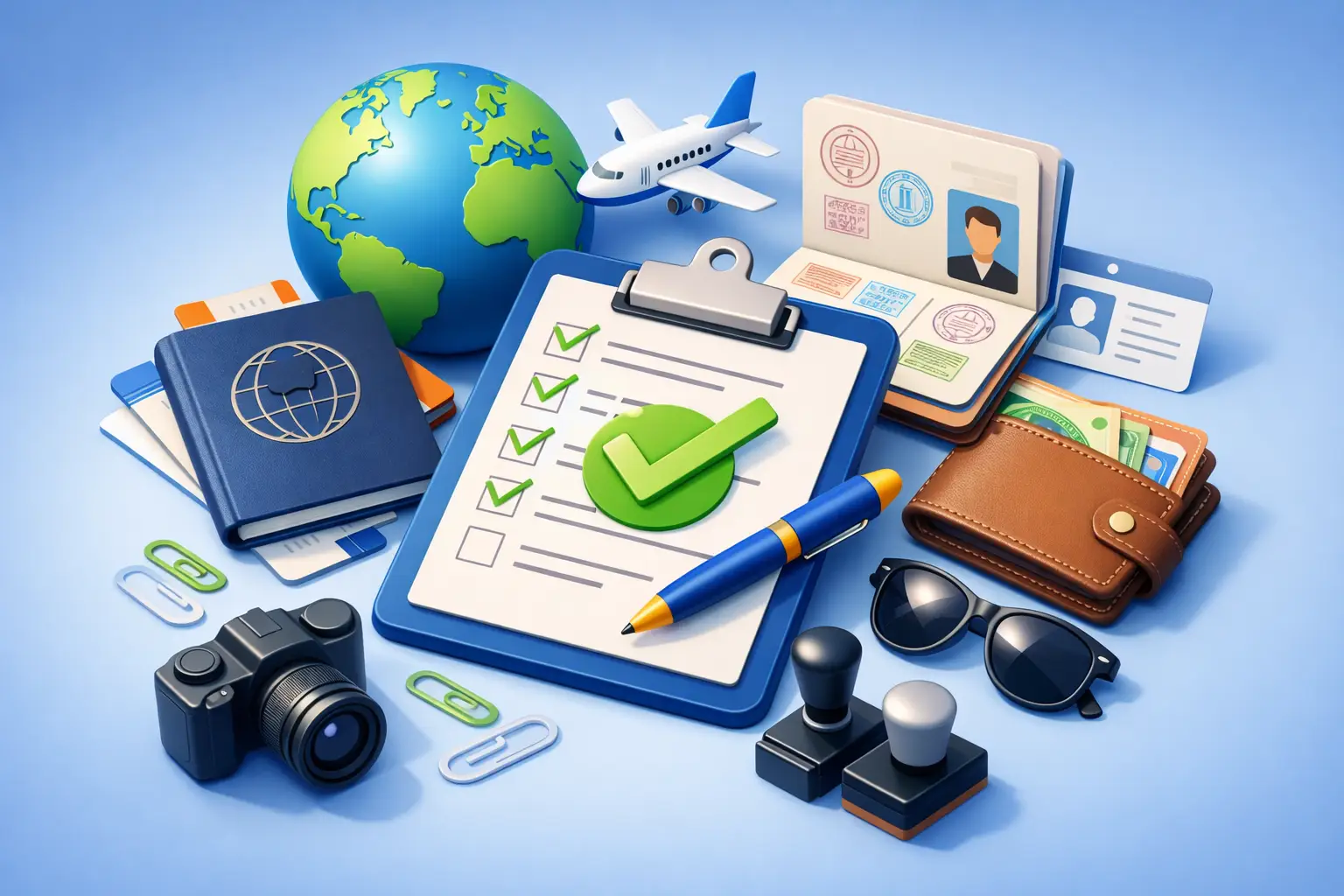
In practice, the best visa documents checklist should usually include these categories:
- Valid international passport with sufficient validity and blank pages
- Completed visa application form
- Passport-sized photographs that meet embassy specifications
- Visa appointment confirmation and payment receipt where required
- Cover letter explaining the purpose of travel
- Flight reservation or proposed itinerary
- Hotel booking or accommodation details
- Travel insurance where required, especially for Schengen visas
- Recent bank statements, usually 3 to 6 months
- Employment letter, pay slips, or business registration documents
- Tax records where relevant
- Marriage certificate or birth certificates if traveling with family or using family ties as supporting context
- Proof of legal residence if applying from a country that is not your country of nationality
- Invitation letter if visiting family, friends, or attending business events
That may look straightforward, but the real question is not whether you have each item. It is whether each item supports the same narrative.
Why consistency matters more than volume
A common misconception is that more documents automatically mean a stronger file. In reality, too many irrelevant papers can make an application look disorganized. Visa officers are not looking for a stack of random evidence. They are looking for coherence.
If your application says you are taking a seven-day holiday, but your bank activity does not support that trip, your employment letter is vague, and your itinerary is overly ambitious, the issue is not quantity. The issue is credibility. In the same way, if you submit strong income records but fail to explain a sponsor, a recent large deposit, or a change in employment, the file may raise unnecessary questions.
A professional checklist helps you think like an officer reviewing your case. Does this application clearly show who you are, why you are traveling, how the trip will be paid for, and why you will return after the visit? If the answer is not obvious within a few minutes, the file likely needs work.
Documents that often cause delays or refusals
Some documents are technically submitted, but poorly prepared. These are often the real problem.
Financial documents
Bank statements are among the most scrutinized documents in many visitor visa applications. Officers often look beyond the balance itself. They assess whether the account activity is consistent, whether income appears traceable, and whether sudden deposits suggest borrowed funds. A healthy closing balance helps, but stable account movement is often just as important.
If someone else is sponsoring your trip, that can be acceptable, but it must be documented properly. A sponsor letter alone is not enough. The relationship, financial ability, and reason for sponsorship should all be clear.
Employment and business proof
Employment letters should be current, properly signed, and specific. They should confirm your role, salary, start date, and approved leave where relevant. If you own a business, registration documents help, but so do business bank statements, tax filings, and evidence of real operations.
Many refusals happen not because the applicant lacks a job or business, but because the proof is too thin to carry weight.
Travel purpose documents
Your itinerary should make practical sense. If you plan to visit multiple countries, the route, timeline, and budget should align. If you are attending an event, there should be documentation of the event itself. If you are visiting family, the invitation should match the host’s legal status and address details.
A vague purpose of travel can weaken an otherwise strong file.
How to tailor the checklist by visa type
The best visa documents checklist changes slightly depending on why you are traveling. Tourist visas usually focus on itinerary, funding, and ties to home or country of residence. Business visas often require employer letters, conference registrations, or invitation letters from the host company. Family visit applications may need stronger proof of relationship and host documentation.
Student, work, and relocation-related visas are more document-heavy and usually involve formal admissions, sponsorship evidence, police certificates, medicals, or credential evaluations. In those cases, using a generic visitor visa checklist can create major gaps.
Country matters too. Schengen applications often require structured supporting evidence and travel insurance. UK applications tend to reward a well-explained financial and personal picture. US applications may require fewer uploaded documents in some categories but place significant emphasis on interview readiness and overall credibility. UAE applications can move faster, but accuracy still matters.
This is why experienced guidance can save time. A checklist should not only tell you what to submit. It should tell you what deserves more attention in your specific case.
A smarter way to prepare your file
Start earlier than you think you need to. Some documents, such as employment letters, updated bank statements, or corrected civil documents, can take time to obtain. Rushing often leads to inconsistencies.
Next, review your application as a full story, not as separate documents. Your passport history, job details, finances, and travel purpose should all point in the same direction. If something is unusual, explain it clearly in your cover letter rather than hoping it will be ignored.
It also helps to check document quality. Names should match across records. Dates should be accurate. Scans should be legible. If any document is not in English, an official translation may be required depending on the destination.
Finally, resist the temptation to guess. If an embassy asks for six months of bank statements, do not submit two. If photo specifications are strict, do not use an older passport photo because it is convenient. Small shortcuts can create expensive setbacks.
When professional support makes the difference
For straightforward cases, a solid checklist and careful preparation may be enough. But if you are applying with dependents, using a sponsor, traveling after a prior refusal, or submitting from a country where your residency status must also be shown, expert review can make a meaningful difference.
A premium visa consultancy does more than collect documents. It helps position your application correctly, identify weak spots early, and present your paperwork in a way that reflects seriousness and credibility. For busy professionals, that level of support is often the difference between a stressful process and a well-managed one.
At Walz Travels, this is exactly where expert guidance becomes valuable - especially for travelers managing complex international plans across work, family, and multiple jurisdictions.
The strongest visa applications are rarely accidental. They are prepared with care, checked for consistency, and tailored to the destination and travel purpose. If you want your next application to reflect that standard, WhatsApp wa.me/447398753797 or visit walztravels.us.