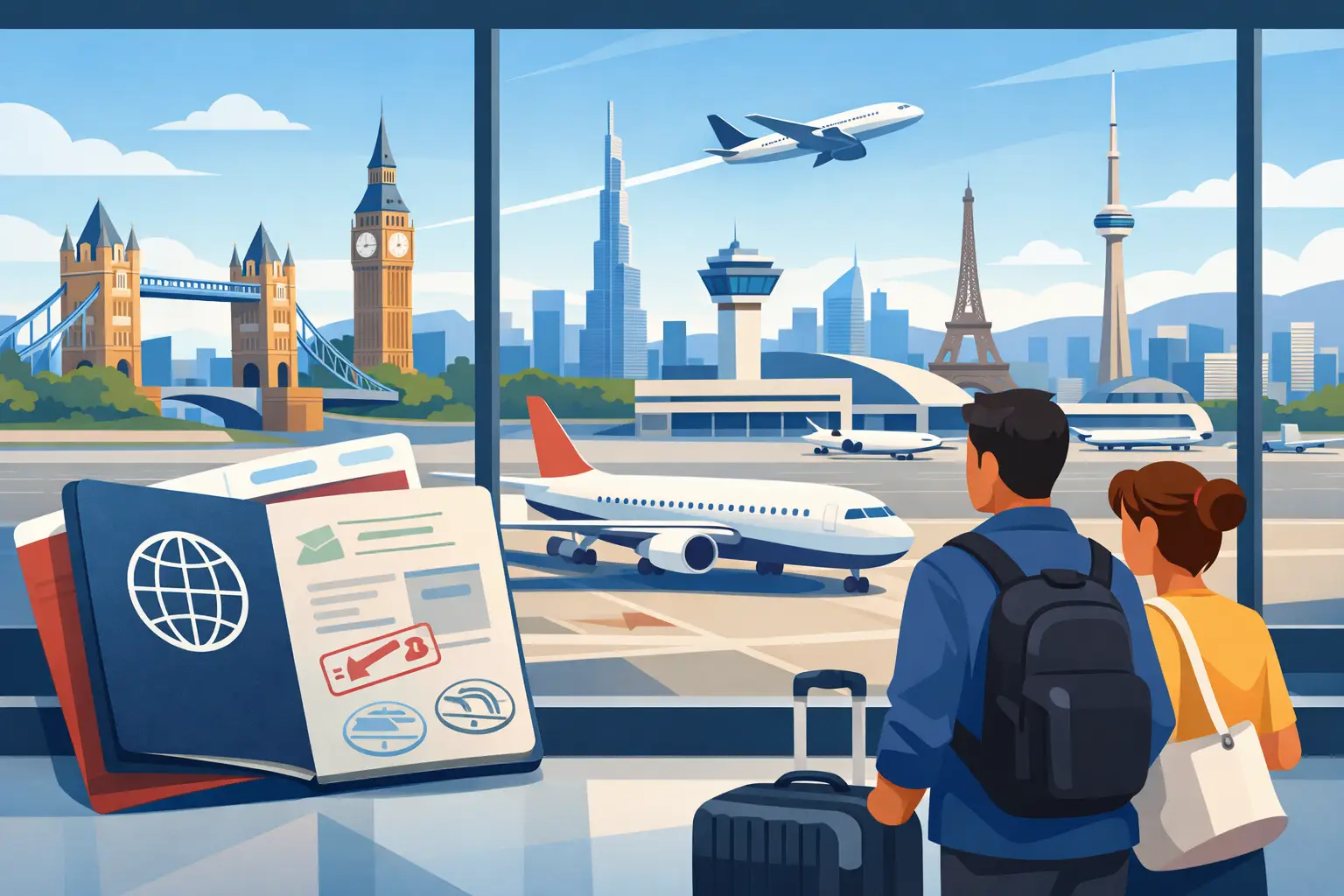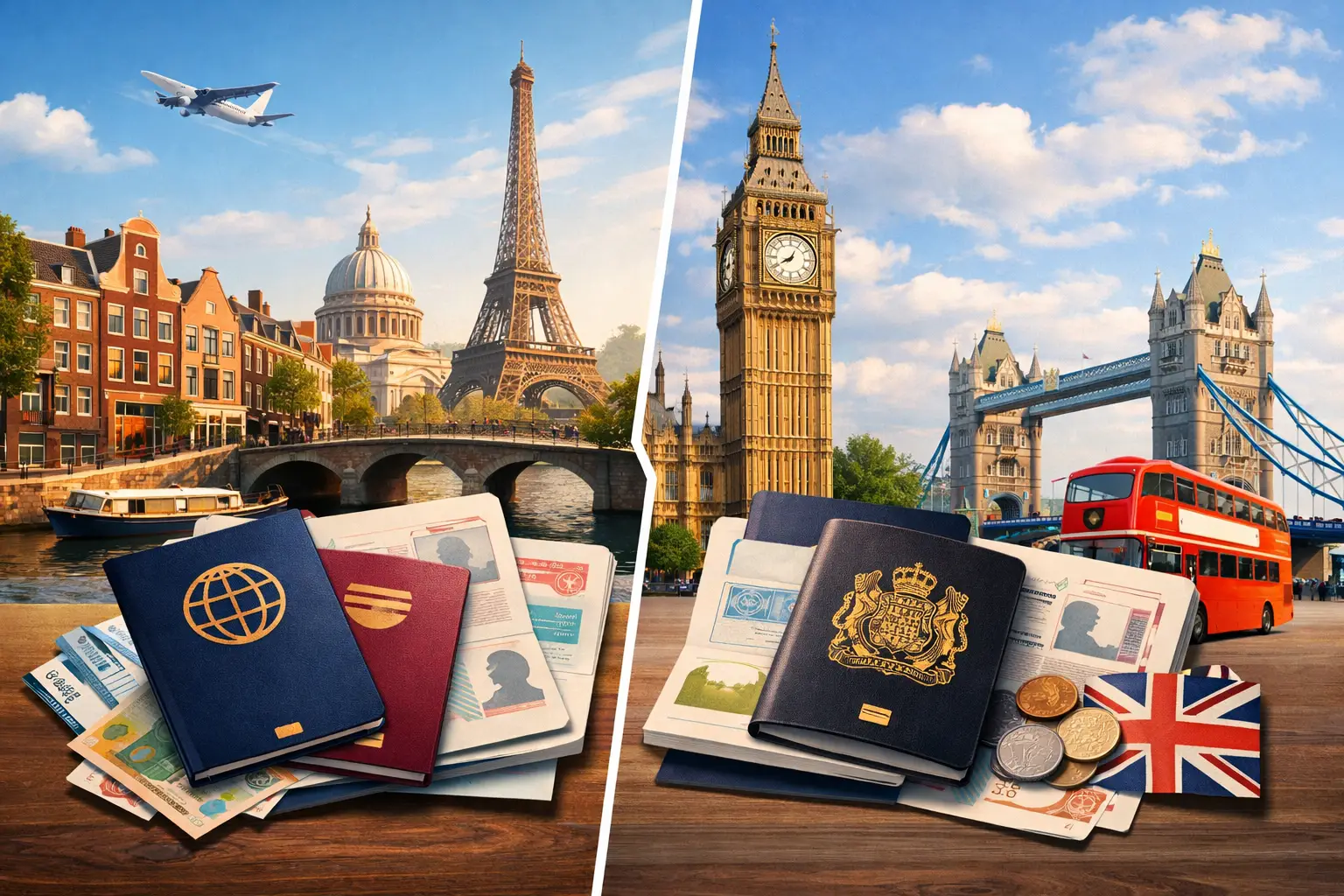
A Paris weekend, a London business meeting, and a family stop in Amsterdam may look like one European itinerary. From a visa perspective, they are not. Understanding the difference between a Schengen visa vs UK visa before you book flights can prevent expensive changes, missed appointments, and avoidable travel disruption.
For Nigerian and Ghanaian passport holders, as well as other travelers who require entry clearance, the choice is determined by where you intend to travel, how long you will stay, and which country is your main destination. A Schengen visa and a UK visa are separate permissions issued under different immigration systems. One does not replace the other.
Schengen Visa vs UK Visa: The Core Difference
A Schengen visa is designed for short visits across much of continental Europe. It can allow eligible travelers to visit multiple countries in the Schengen Area during the validity of the visa, subject to the number of entries granted and the 90-days-in-any-180-days rule.
A UK visitor visa is for travel to the United Kingdom: England, Scotland, Wales, and Northern Ireland. The UK is not part of the Schengen Area, even though it is geographically close to Europe and frequently appears on the same vacation itinerary.
This distinction matters immediately when planning a multi-city trip. If your itinerary is London, Paris, and Rome, you may need both a UK visa and a Schengen visa. If you are visiting only Paris, Milan, Barcelona, or Amsterdam, the Schengen visa may be the relevant application. If London is your only destination, a UK visa is generally the route to consider.
Ireland is another point that often causes confusion. Ireland is neither part of the UK nor part of the Schengen Area for standard visitor visa purposes. Travelers should always check Ireland’s separate entry requirements rather than assuming a UK or Schengen visa will cover the trip.
Where Each Visa Takes You
The practical value of a Schengen visa is its regional reach. The Schengen Area includes many popular destinations for leisure, family visits, conferences, and luxury holidays, including France, Italy, Spain, Germany, the Netherlands, Switzerland, Greece, Portugal, and several others.
This makes it especially useful for travelers who want a European itinerary with more than one stop. A properly issued multiple-entry Schengen visa can make movement between participating countries straightforward during the approved travel period. However, it does not automatically provide entry into every European country, and border officials may still ask for evidence that your journey matches your visa purpose and supporting documents.
The UK visa is more focused geographically, but it may be the better fit for a specific purpose. London remains a major destination for business, family events, education-related visits, shopping, entertainment, and connecting with the African diaspora. A Standard Visitor visa can be appropriate for tourism, visiting relatives or friends, attending meetings or conferences, and certain other permitted activities. It does not authorize employment in the UK.
For travelers combining the two regions, sequence matters. You should hold the required visa before traveling to the relevant destination. Having a confirmed flight to London does not help you enter France without a valid Schengen visa, and having a Schengen visa does not give you permission to enter the UK.
Which Country Should Receive Your Schengen Application?
With a UK visa application, the destination is clear: you apply for permission to enter the UK. Schengen applications require more careful itinerary planning.
You should normally apply through the country where you will spend the most nights. For example, if you will spend five nights in France and three nights in Italy, France is generally the appropriate country for your application. If you will spend an equal number of nights in several Schengen countries, apply through the country of first entry.
This is not simply an administrative preference. Applying through a country that does not match your genuine travel plan can raise questions about your application. Your hotel reservations, flight routing, travel insurance, leave approval, and cover letter should tell one consistent story.
A well-organized itinerary does not need to be complicated. It needs to be credible. If your primary goal is a Paris vacation with a brief stop in Brussels, present it that way. If you are attending a trade conference in Germany before continuing to Italy, make the business purpose and travel dates easy for a visa officer to understand.
Documents: Similar Foundations, Different Expectations
Both applications usually require a valid passport, an application form, photographs, proof of finances, evidence of your travel purpose, and proof that you have strong reasons to return to your country of residence. Yet the details, forms, appointment procedures, and supporting-document requirements differ.
For a Schengen visa, applicants commonly provide round-trip flight reservations, accommodation bookings, travel medical insurance meeting Schengen requirements, bank statements, employment documentation or business records, and a detailed itinerary. The consulate may also request additional documents depending on your nationality, country of legal residence, age, or purpose of travel.
For a UK visa, the application is completed online and supporting evidence is uploaded or submitted according to the relevant process. Applicants often need to show their financial position, employment or business ties, family circumstances, previous travel history where applicable, and a clear explanation of who is paying for the trip. If someone is sponsoring the visit, their evidence must also be persuasive and consistent.
In both cases, financial documents should do more than show a balance on one day. They should demonstrate a reasonable source of funds and support the travel plan presented. Sudden unexplained deposits, conflicting dates, generic invitation letters, or itineraries that do not match your budget can weaken an otherwise promising application.
For diaspora travelers living in the United States, Canada, the UAE, or the UK, lawful residence is also essential. You will generally need to show your valid immigration status in the country from which you are applying. A Nigerian or Ghanaian passport holder living abroad should not assume that nationality alone determines where an application must be filed.
Processing Times and Planning Trade-Offs
Neither visa should be treated as a last-minute task. Appointment availability, seasonal demand, document corrections, and additional review can affect timing. Summer holidays, December travel, Easter, school breaks, and major event periods often create higher demand.
The safer approach is to begin planning well before your intended departure. Confirm which visa or visas you need, prepare documentation early, and avoid making nonrefundable travel commitments until you understand the application timeline and your level of risk.
The Schengen process can require careful coordination because your bookings, insurance dates, and main-destination rule must align. The UK process may feel more centralized, but it still requires strong evidence that your visit is temporary, affordable, and genuinely within the permitted visitor rules.
A refusal in either system can affect future applications, particularly where the same concerns remain unaddressed. The right response is not simply to submit the same documents again. Review the reason for refusal, correct the weakness, and present a more complete case when appropriate.
Choosing the Right Visa for Your Trip
The answer is often straightforward once the itinerary is clear. Choose the Schengen visa route if your destination is within the Schengen Area and your trip fits the short-stay visitor purpose. Choose the UK visa route if you are traveling to the United Kingdom. Choose both when your plans include the UK and Schengen Europe.
The more challenging question is whether your documentation supports that plan. A professional with stable employment may need to demonstrate approved leave and ongoing work commitments. A business owner may need company registration documents, tax evidence, and proof of continuing operations. A family traveler may need to show how the trip will be funded and why each applicant will return home after the visit.
Travel should feel exciting, not administratively overwhelming. A carefully reviewed application and a realistic itinerary give you more confidence to focus on the purpose of the journey, whether that is a long-awaited European holiday, an important client meeting, or time with family.
For tailored support with your Schengen or UK visa plans, WhatsApp Walz Travels at wa.me/447398753797 or visit walztravels.us. A clear visa strategy before booking can make every part of your international journey easier to manage.